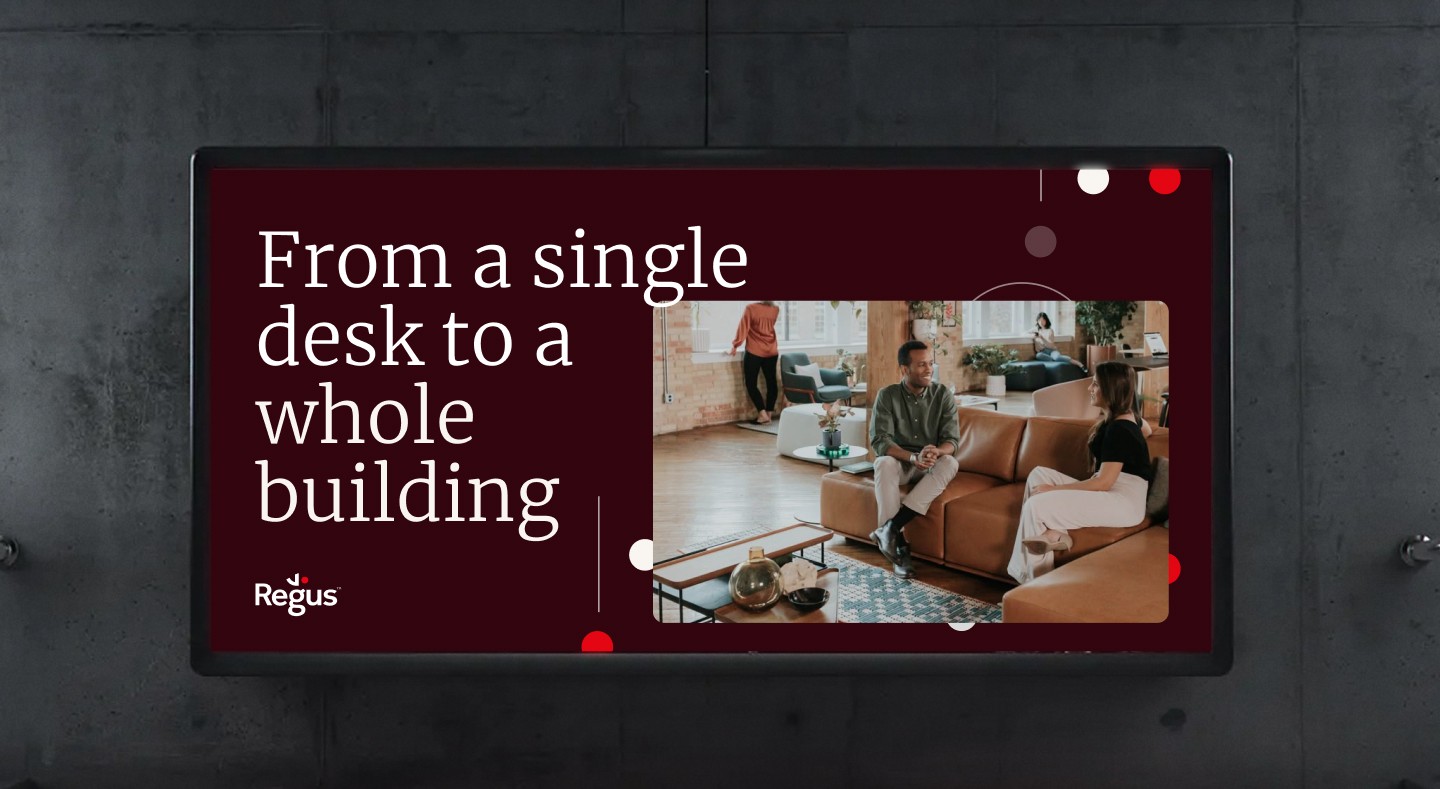
Regus.com
2025
UX/UI
Senior Product Designer (UX/UI)

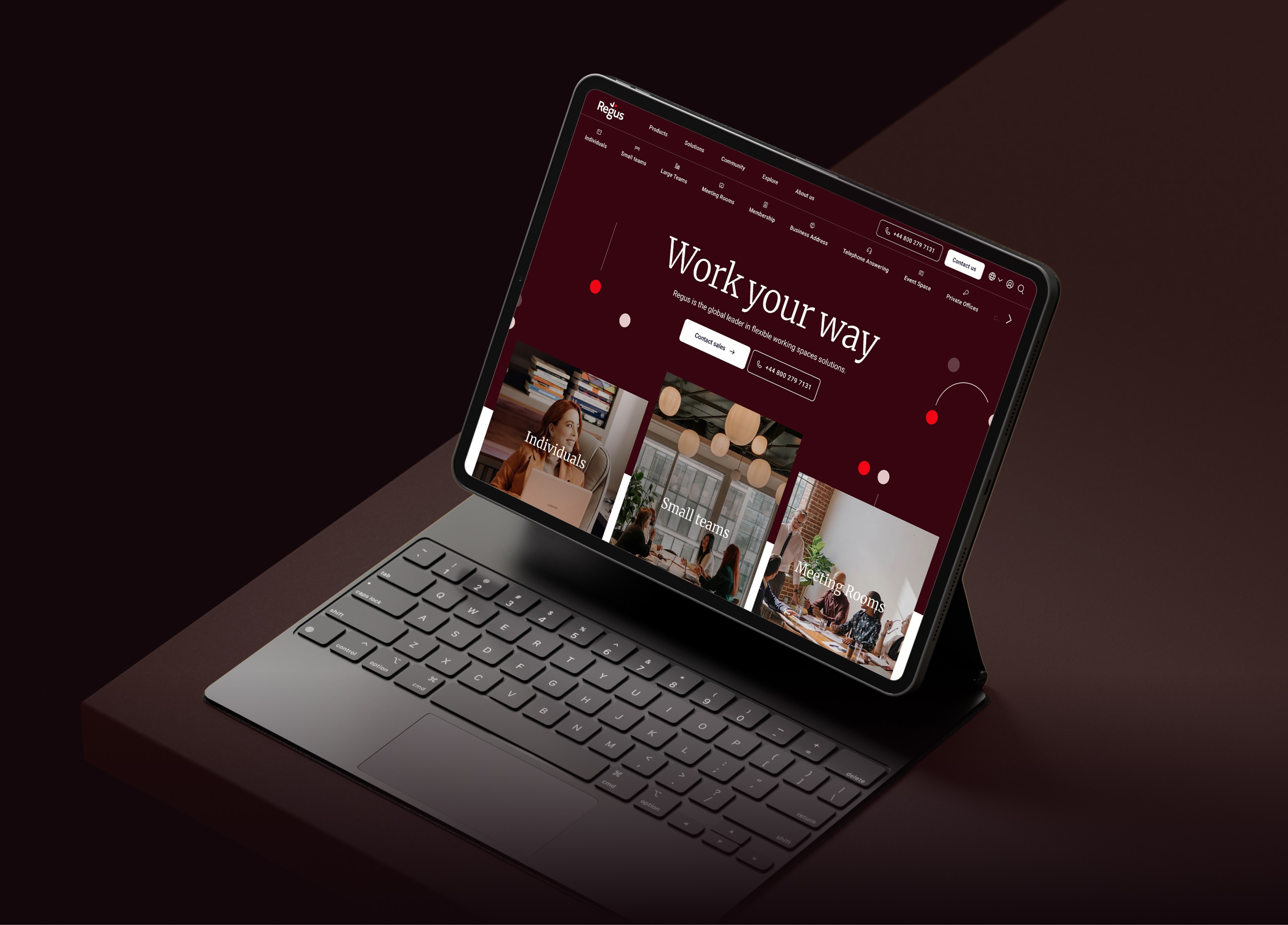
Regus is a global workspace provider operating across multiple markets and customer segments. The project focused on redesigning the Regus website experience to improve usability, conversion, and scalability, while evolving the design system to support long-term growth and faster delivery across teams.
The challenge was to balance brand consistency, conversion-driven UX, and flexibility for future expansion.
The Challenge
The existing website experience presented several challenges:
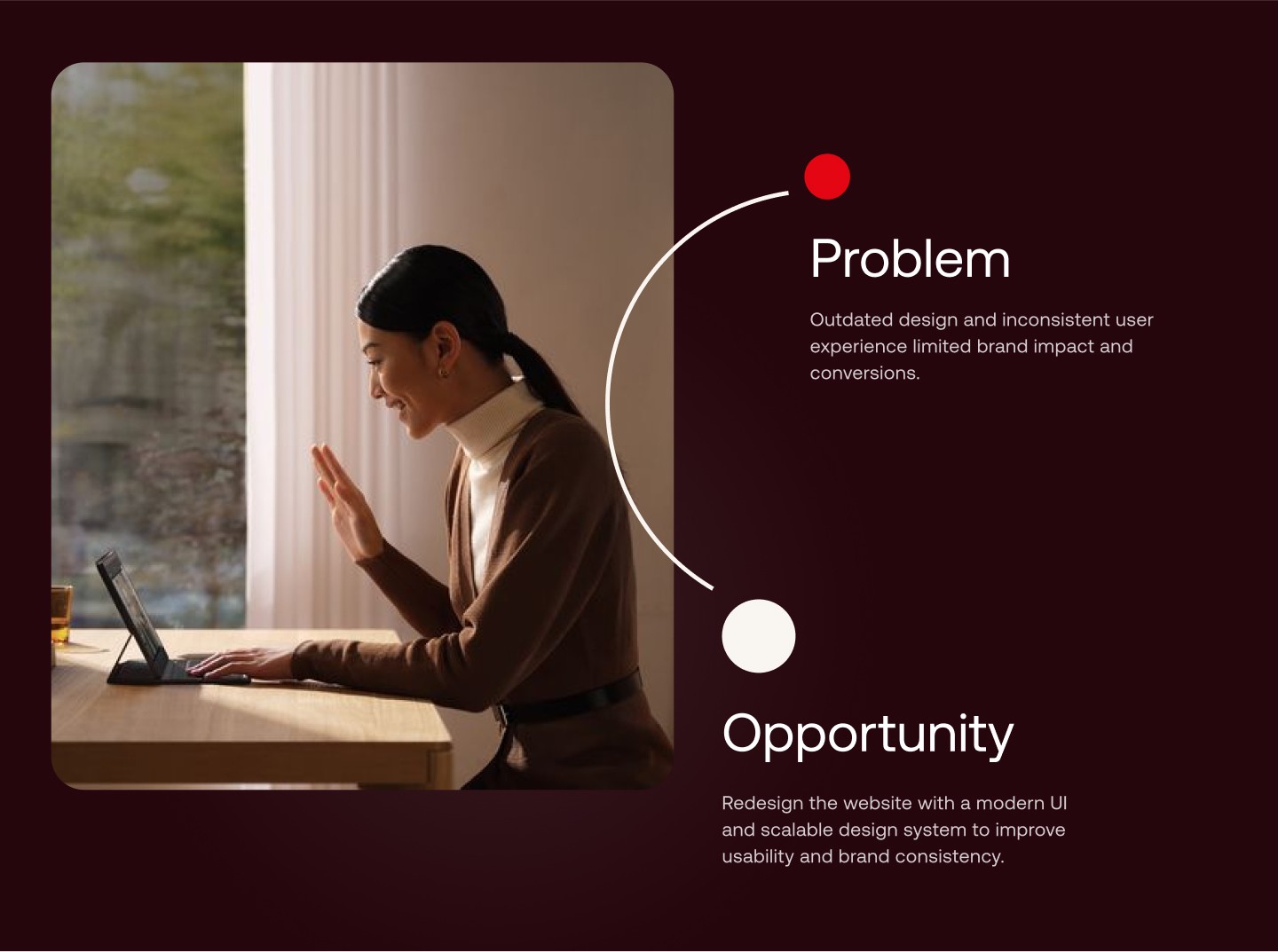
Inconsistent UI patterns across pages and markets
Fragmented user journeys, especially in onboarding and conversion flows
Limited scalability of the existing design system
Increasing design-to-development friction as the product evolved
From a business perspective, the goal was to improve conversion and efficiency, while creating a more cohesive and modern digital presence aligned with Regus’ global positioning.
As Senior Product Designer, I worked end-to-end across UX, UI, and design systems, collaborating closely with product managers, engineers, and stakeholders.
Responsibilities included:
Leading UX and UI design for key website journeys
Defining information architecture and user flows
Designing high-fidelity UI for responsive web
Creating and evolving the design system and component library
Supporting developers with design QA and handoff
Ensuring accessibility, consistency, and scalability across the product

Process
& Approach
Understanding the problem
The work started with a deep understanding of business goals, user needs, and technical constraints.
Inputs included:
Stakeholder workshops and alignment sessions
Existing analytics and performance data
Review of competitor patterns and best practices
Audit of the current UI and design system
This helped identify high-impact areas, particularly around homepage clarity, onboarding, and pricing-related decision points.
Based on insights from discovery, the UX strategy focused on simplifying user journeys and reducing cognitive load at key decision points. I restructured content hierarchy to improve scannability and ensured clearer entry points for different user needs.
User flows were mapped and iterated before moving into high-fidelity design, allowing early validation of structure and logic. This approach helped align stakeholders and reduce rework later in the process.
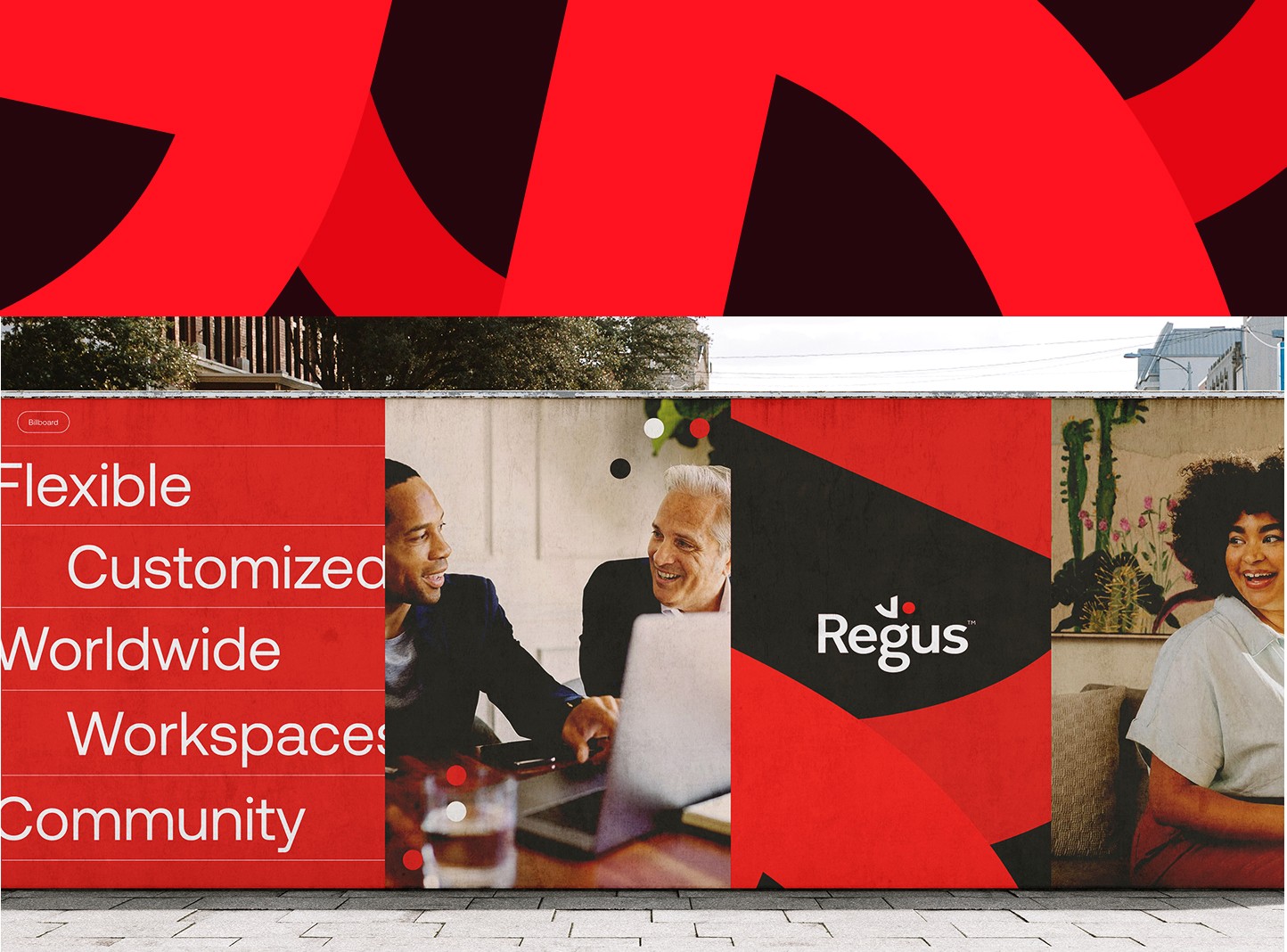
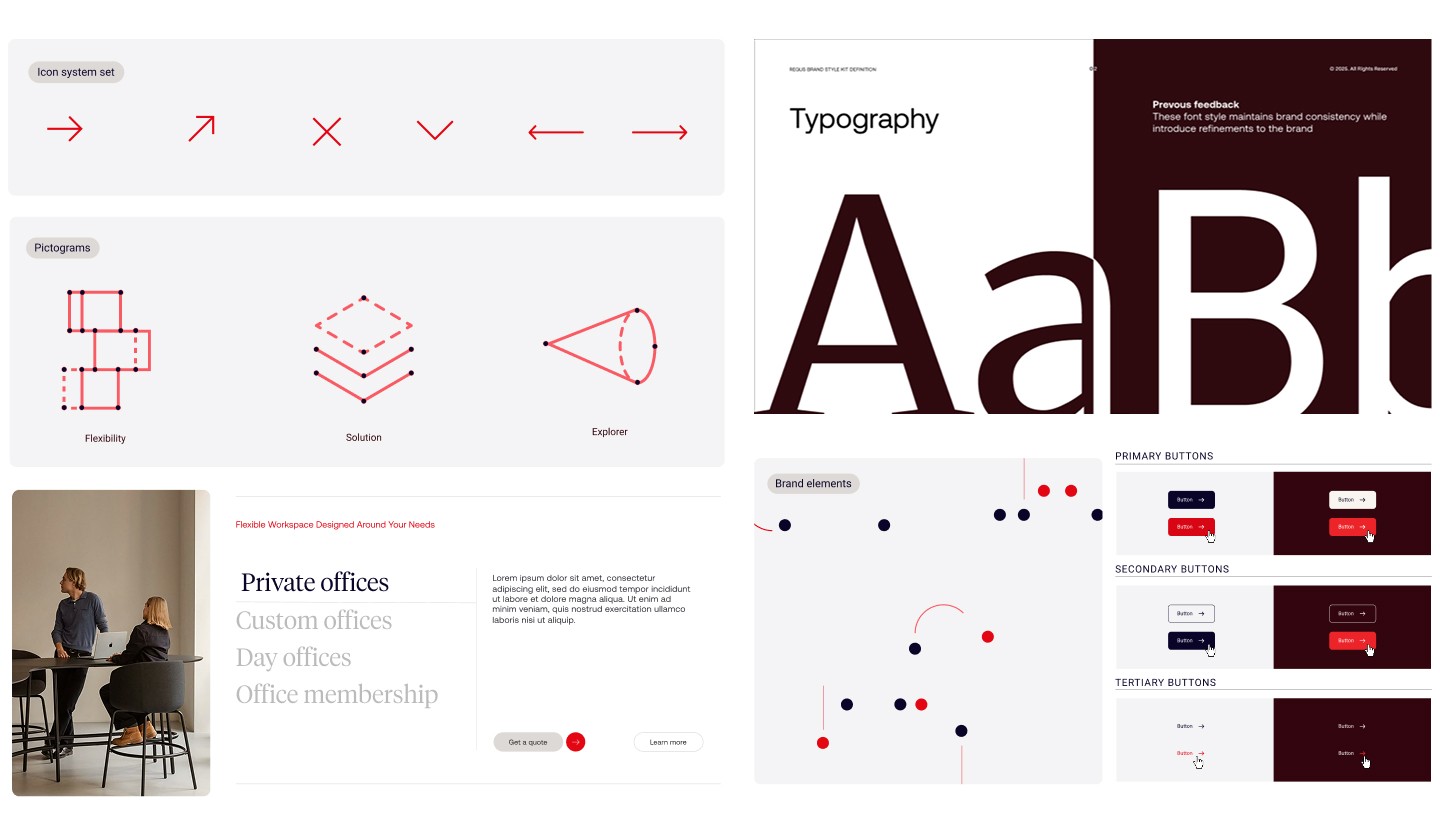

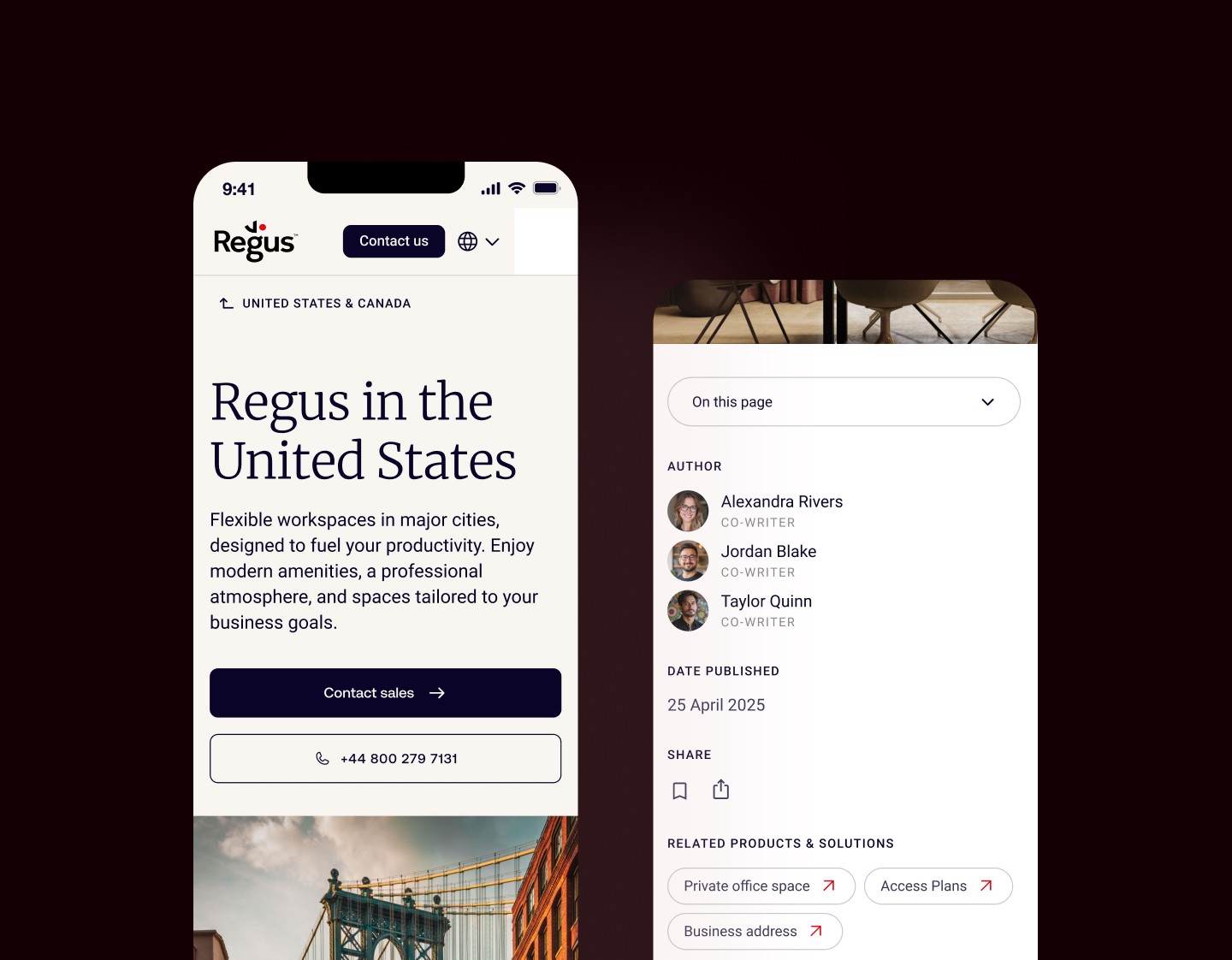
The visual design aimed to feel modern, trustworthy, and flexible enough for a global, multi-market product. I focused on establishing a clear hierarchy through typography and spacing, creating modular layouts that could adapt across breakpoints, and defining consistent interaction patterns.
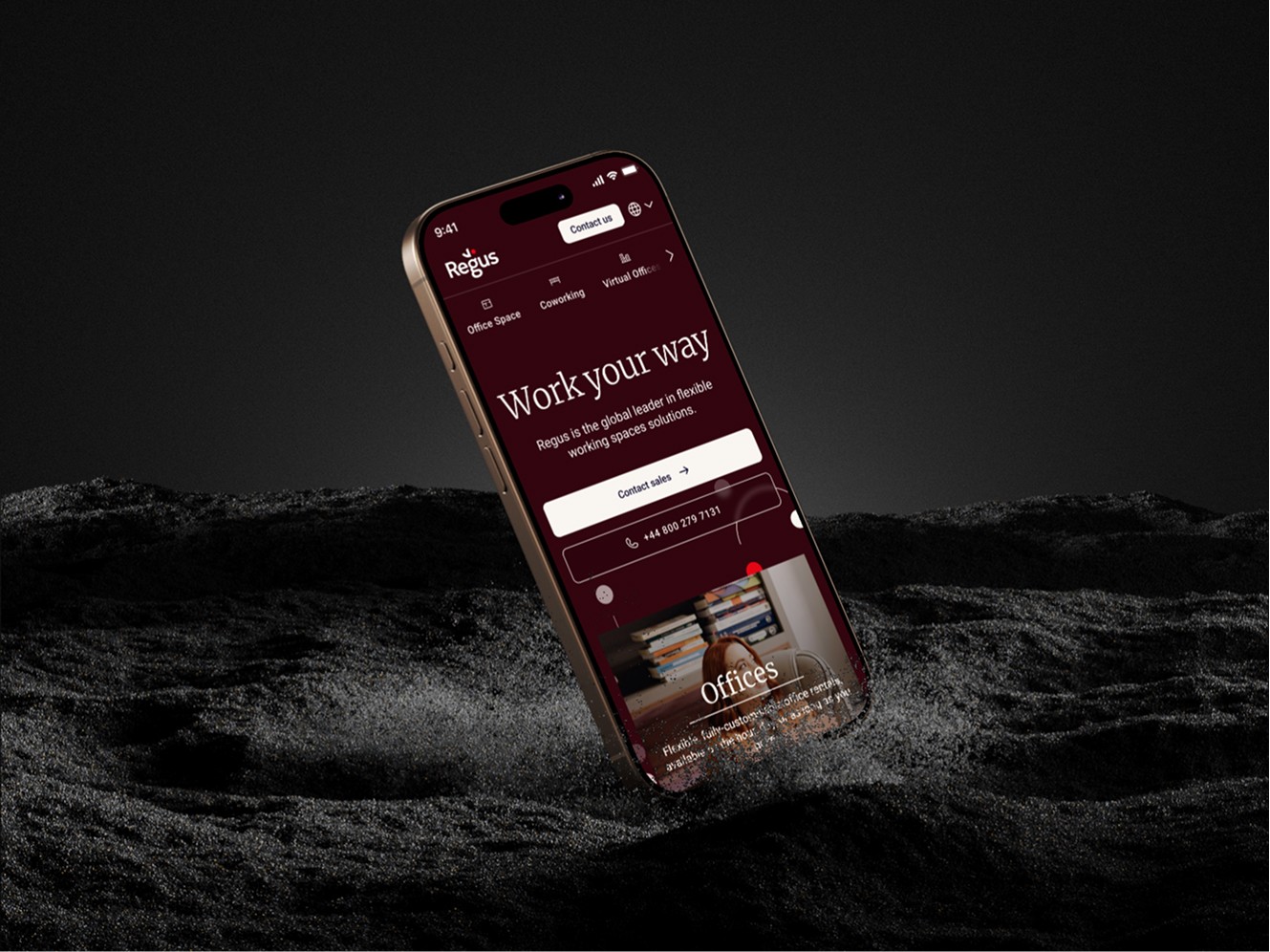
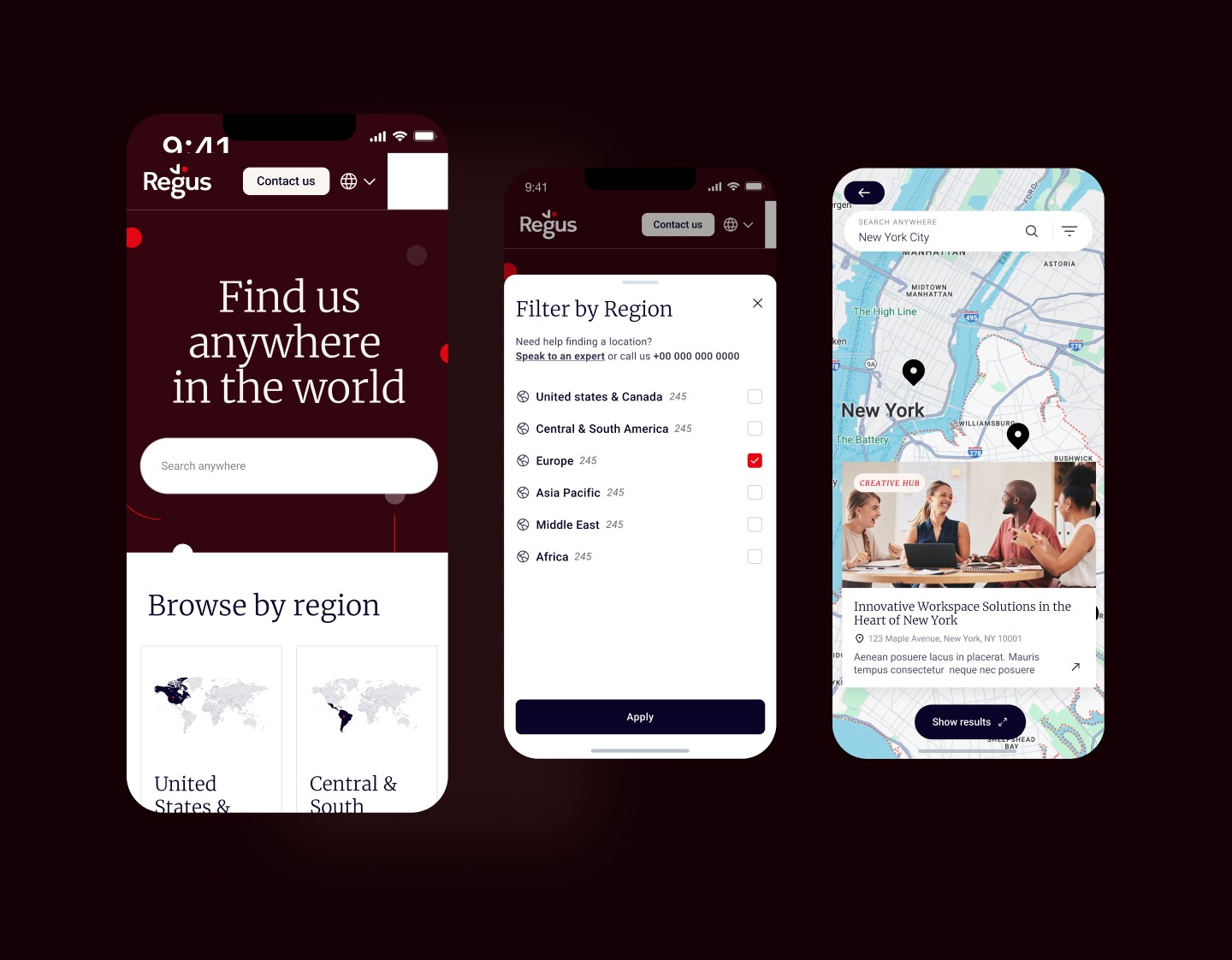
The UI was designed responsively, ensuring a cohesive experience across desktop and mobile. Particular attention was given to conversion-critical components such as calls-to-action, pricing sections, and onboarding steps.
Design System Evolution
Alongside the website redesign, I worked on evolving the Regus design system to better support scale and consistency. This included defining core components and variants, improving token usage, and documenting patterns for developer handoff.
Strengthening the design system reduced duplication, improved consistency across screens, and made it easier for teams to build and iterate efficiently.
Outcomes
& Impact
The redesign delivered measurable improvements across both user experience and internal workflows:
+18% increase in trial-to-paid conversion through onboarding improvements
−12% reduction in homepage bounce rate
−30% reduction in design-to-development handoff time
Improved consistency across key website pages and components
Beyond metrics, the project established a stronger foundation for future product iterations and market expansion.
Learnings
This project reinforced the importance of aligning UX strategy with business goals early, and of treating design systems as a long-term product investment rather than a purely visual layer. Working closely with engineering from the start proved essential to building scalable and sustainable solutions.