Norton Rose Fulbright
2025
UX/UI
Senior Product Designer (UX/UI)

Norton Rose Fulbright is a global law firm operating across multiple regions, practice areas, and markets. As the firm continued to evolve its digital presence, there was a need to modernise the website experience while maintaining the credibility, authority, and consistency expected from a top-tier legal brand.
The project focused on refreshing the visual language and digital experience to feel more contemporary and scalable, while ensuring clarity, accessibility, and alignment with the firm’s global brand guidelines. I worked across UX, UI, and systemisation, collaborating closely with stakeholders and development.
As Senior Product Designer, I worked across UX strategy and UI execution, partnering closely with brand stakeholders and developers.
My responsibilities included defining page structures and content hierarchy, exploring visual directions aligned with brand values, designing high-fidelity responsive UI, and contributing to a scalable component system that could be reused across the site.


Process
& Approach
The Challenge
Legal websites face a unique balance: they must communicate trust and expertise while remaining clear and usable for a wide range of audiences. In Norton Rose Fulbright’s case, the existing experience felt visually dated and inconsistent across pages, with limited flexibility for future growth.
From a UX perspective, content-heavy pages were difficult to scan and navigate. From a brand and delivery perspective, the lack of modularity made updates slow and inconsistent across regions.
The challenge was to modernise the experience without compromising credibility, while creating a scalable UI foundation that could support ongoing evolution.
Experience Goals & Direction
Based on these insights, we defined clear experience goals:
Reinforce credibility and authority through a refined visual language
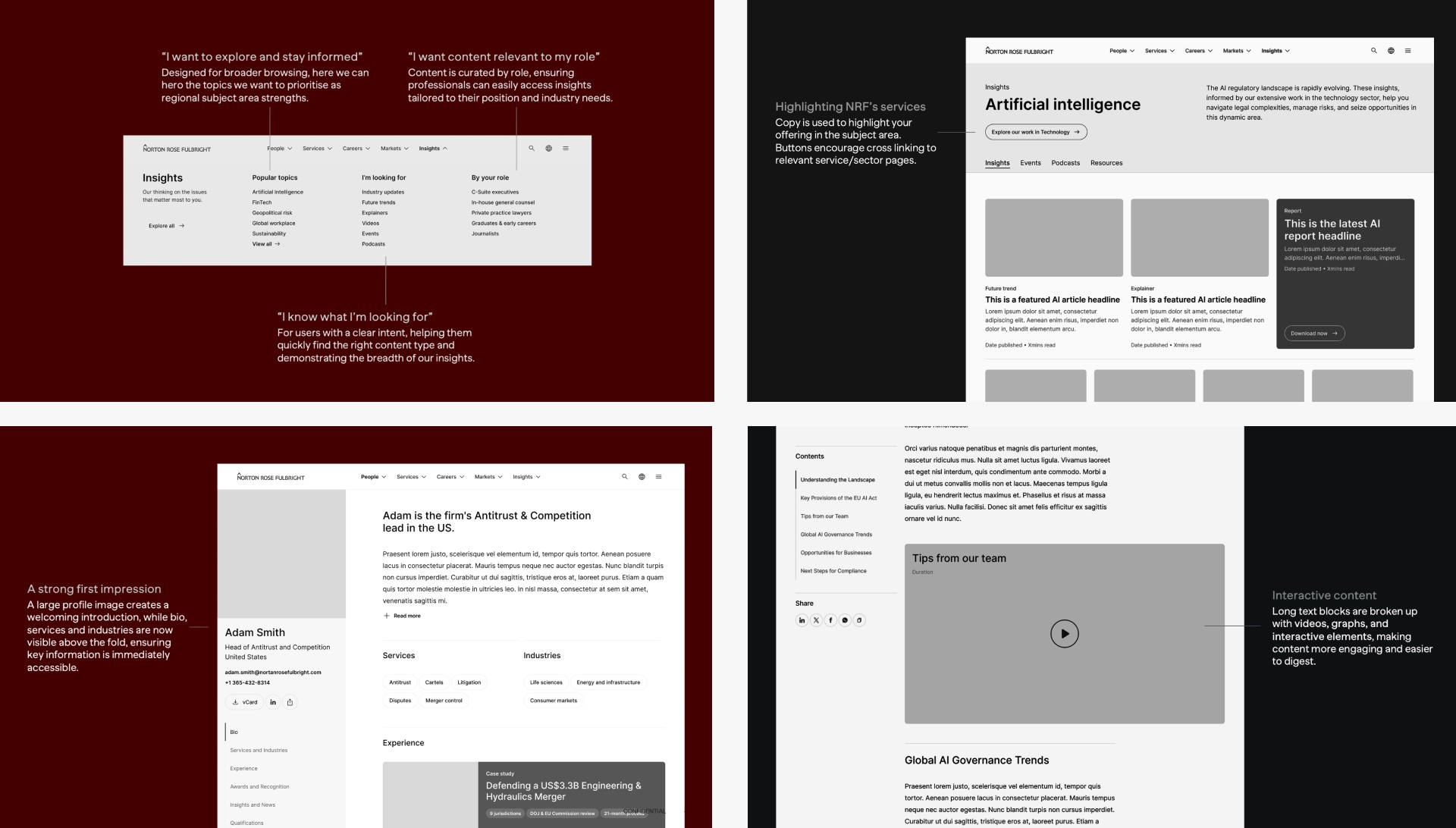
Improve content clarity and scannability across complex pages
Create a modular, scalable UI system aligned with global brand principles
The design direction needed to feel modern and confident, while remaining understated and professional, avoiding trends that could undermine trust.
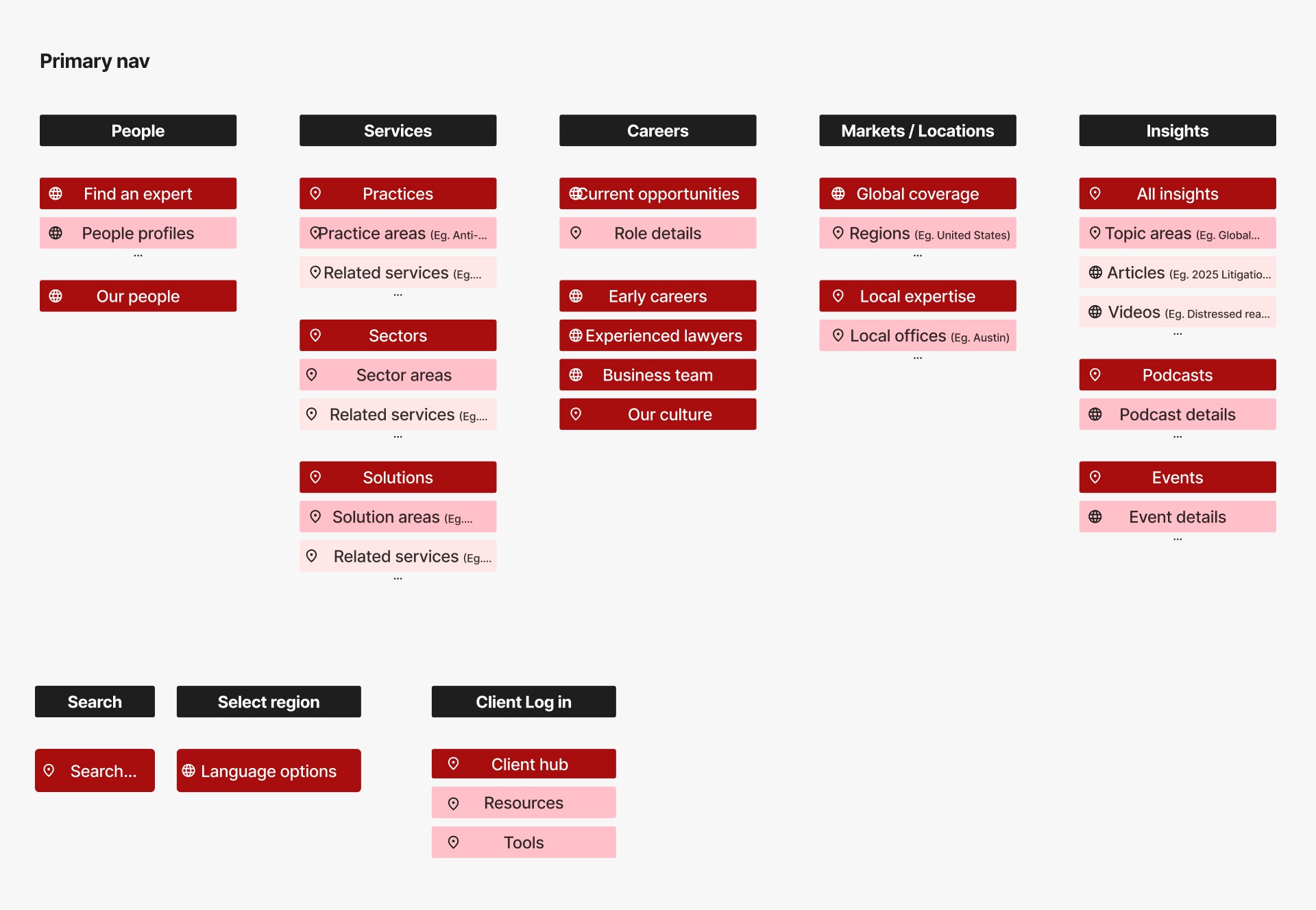
The UX strategy focused on simplifying complex content structures and improving information hierarchy. Pages were redesigned to prioritise key messages, with supporting content clearly structured and easy to scan.
Navigation and layout decisions were guided by real user needs rather than internal organisational structures, helping users reach relevant information more efficiently.
Key decisions included:
Introducing clearer typographic hierarchy
Reducing visual noise on content-heavy pages
Structuring layouts around modular sections
These choices helped balance usability with brand authority.
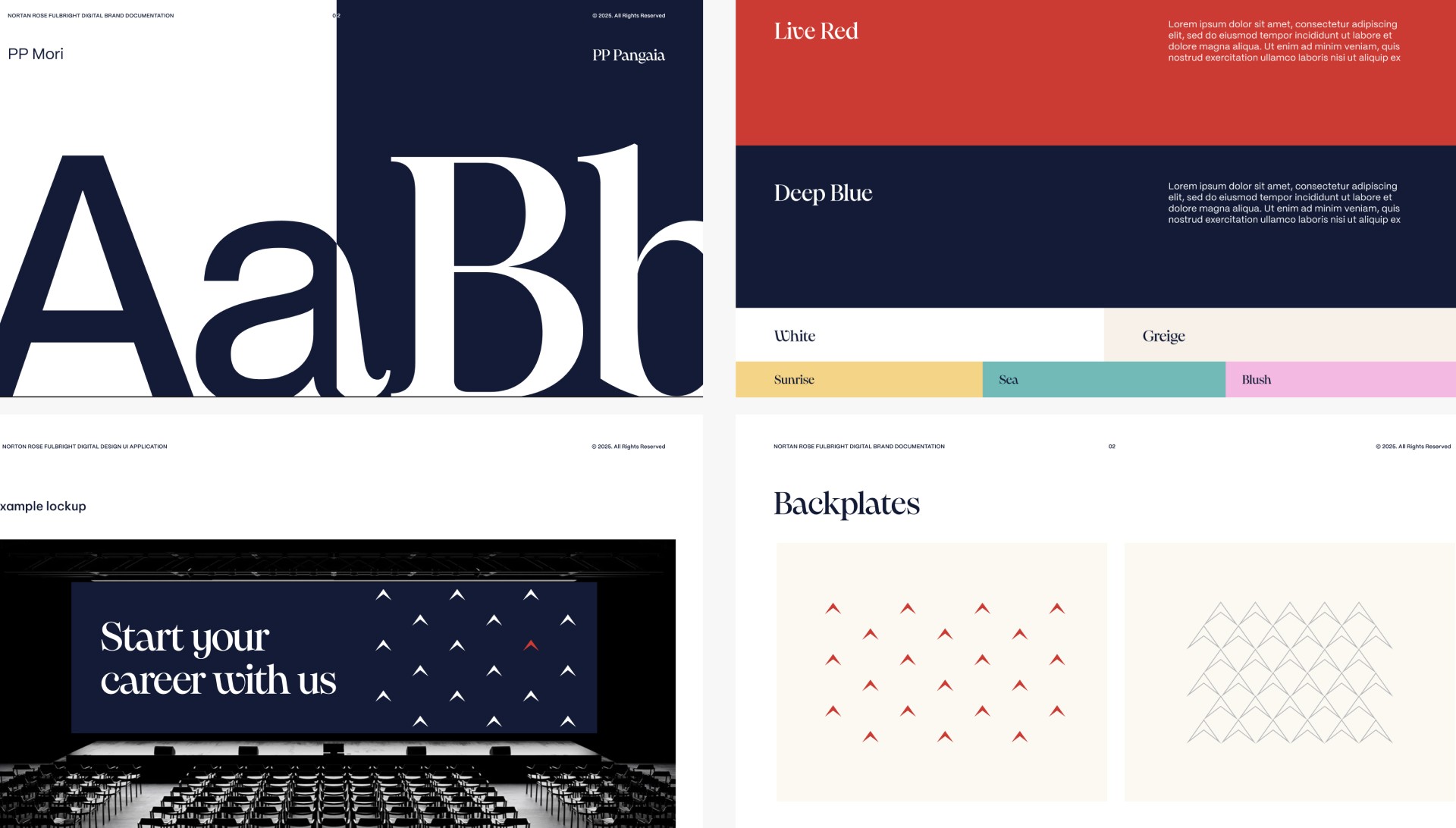
The visual refresh aimed to modernise the brand without losing its established identity. I focused on clean layouts, refined typography, and controlled use of imagery to reinforce professionalism and trust.
Black-and-white photography and restrained colour usage helped create consistency across pages, while modular layouts ensured flexibility across different content types and breakpoints.
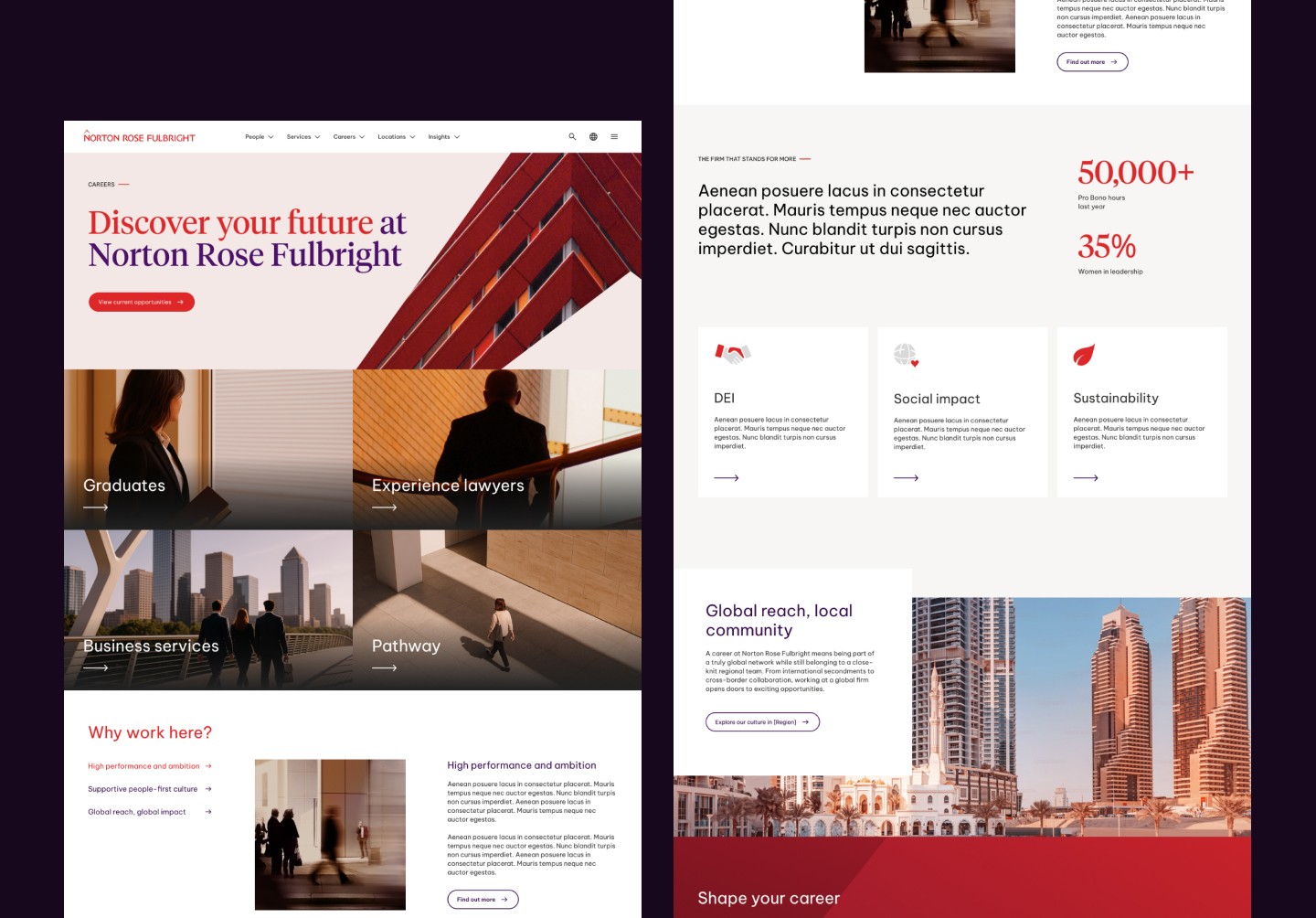
The UI was designed responsively, ensuring clarity and consistency across devices.
Design System & Scalability
To support long-term scalability, I contributed to defining reusable UI components and layout patterns aligned with the firm’s global brand system.
This modular approach improved consistency across pages, reduced duplication, and made it easier for teams to roll out updates across regions without compromising brand integrity.


Outcomes
& Impact
The refreshed experience delivered both qualitative and operational improvements:
A more modern and cohesive digital presence
Improved content clarity and scannability
Faster updates through modular layouts and components
Stronger alignment between brand, UX, and delivery teams
The project established a flexible foundation for future digital initiatives across the firm’s global platform.
Learnings
This project reinforced the importance of balancing brand expression with usability, particularly in highly regulated and reputation-driven industries. Small UX improvements in hierarchy and structure can significantly impact clarity and trust.
Working closely with stakeholders was key to aligning business, brand, and user needs.
