Reed.ai
2024-2025
AI-Powered
Senior Product Designer (UX/UI)

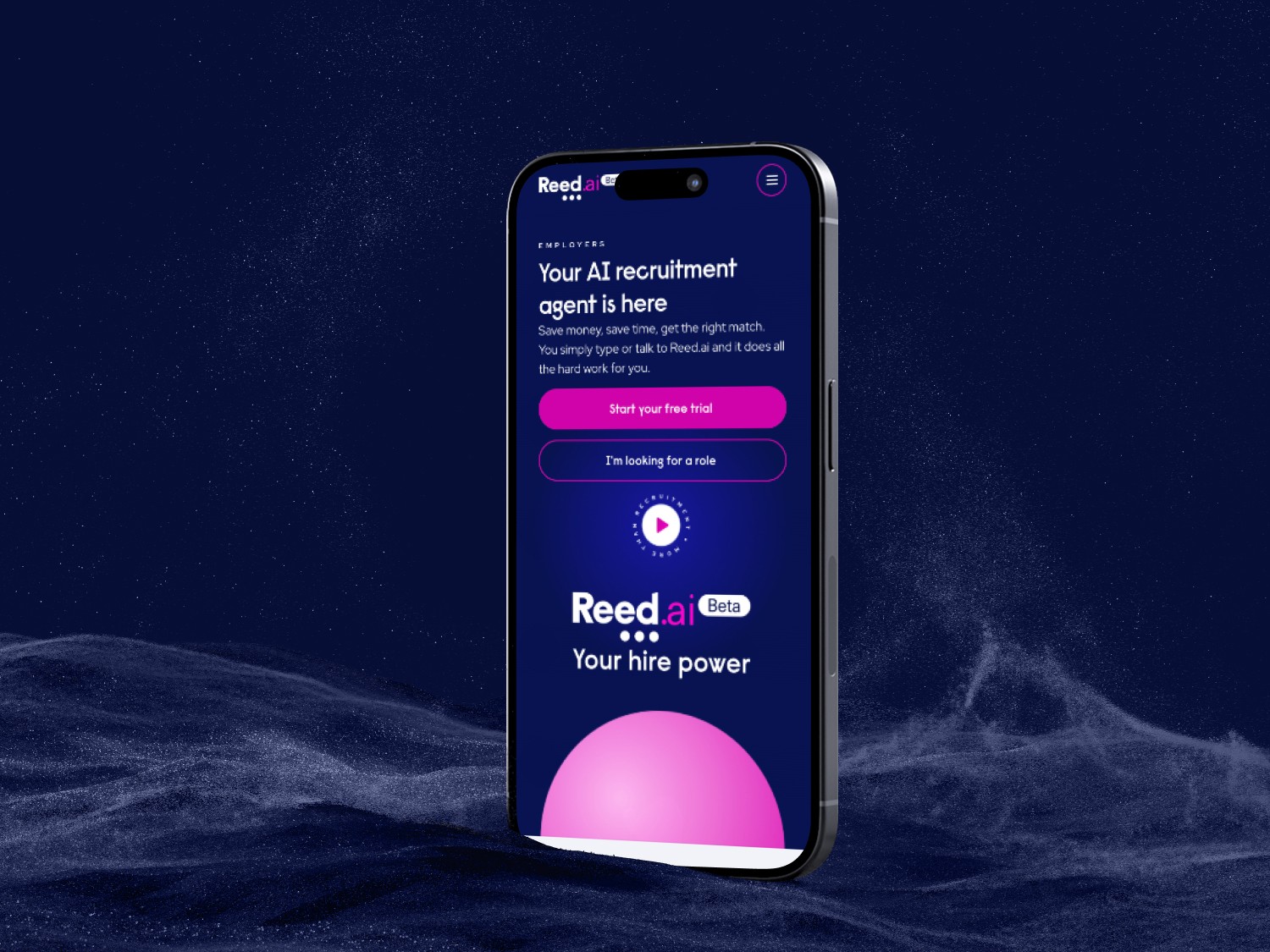
Reed.ai is an AI-powered recruitment platform designed to help companies hire more efficiently while actively reducing bias in hiring decisions. The product leverages artificial intelligence to screen candidates based on skills and experience rather than demographic signals.
The project focused on designing a new the product experience to improve usability, trust, and clarity around AI-driven decision-making. I worked end-to-end across UX strategy, UI design, and interaction patterns, collaborating closely with product, engineering, and data teams.
The Challenge
Despite strong AI capabilities, the hiring experience was underperforming for both sides of the marketplace.
Recruiters struggled with long hiring cycles and irrelevant applications, while candidates often disengaged before completing the process. This resulted in low engagement, slow matching, and reduced marketplace liquidity — directly impacting revenue and platform health.
The core challenge was not automation itself, but how the automation was experienced and understood by users.
As Senior Product Designer, I led the design work from early discovery through final execution. I worked closely with product managers to translate insights into clear UX direction, and partnered with engineers and data scientists to ensure the interface accurately reflected AI logic without overwhelming users.
My responsibilities included defining user flows, designing interaction patterns for AI-assisted decision-making, producing high-fidelity UI, and iterating based on feedback and data.
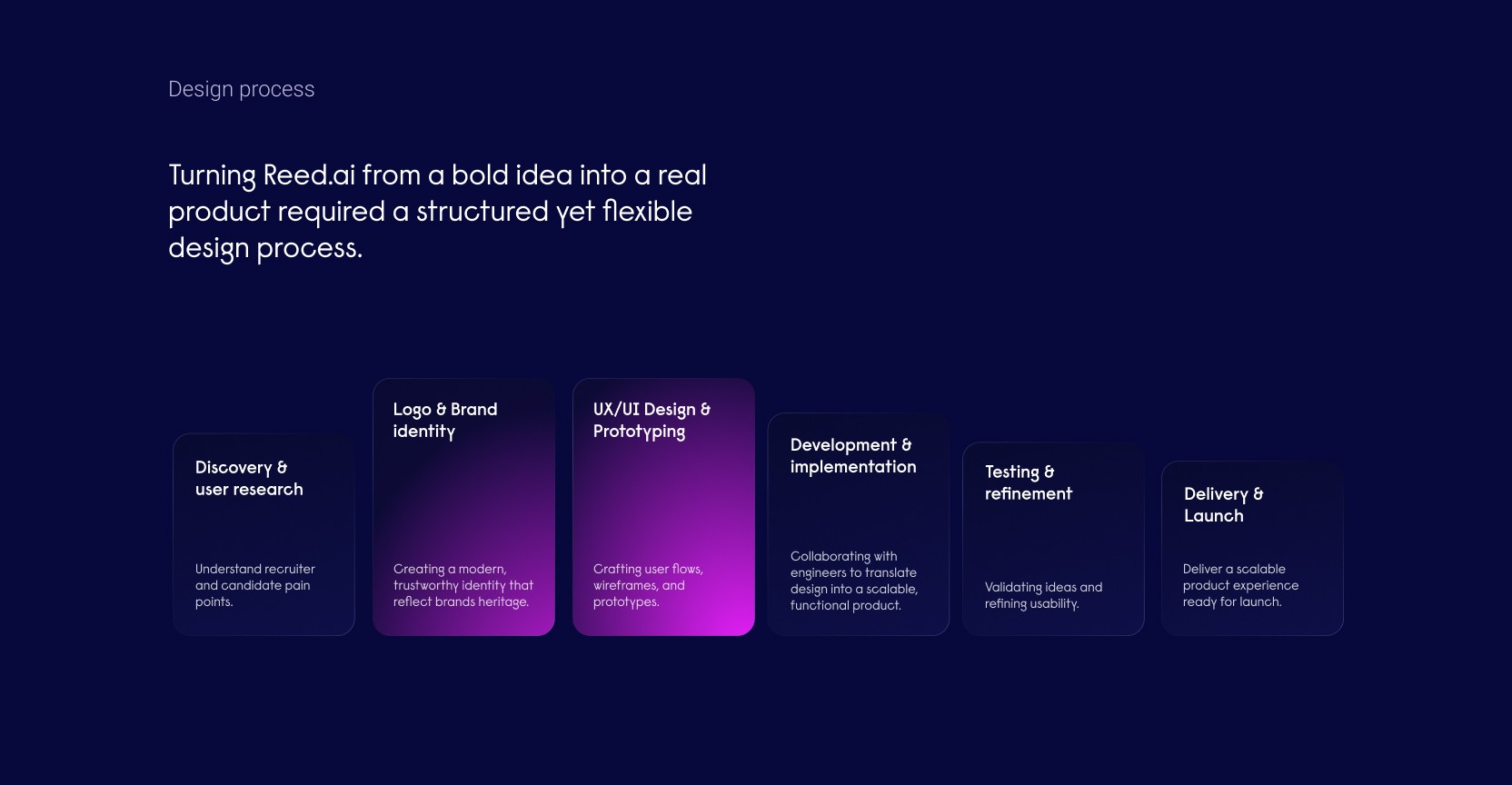


Process
& Approach
Problem Definition & Key Insights
To understand why the hiring process was breaking down, we combined qualitative and quantitative research. This included stakeholder workshops, interviews with recruiters, and analysis of behavioural data across the platform.
The findings revealed clear and measurable problems on both sides:
For employers, 58% of job posts received applicants that didn’t match role requirements, leading to hours wasted reviewing irrelevant profiles and significantly slowing hiring cycles.
For candidates, 73% dropped out before completing the application, largely because they felt their applications lacked visibility and feedback — often described as “disappearing into the void.”
These issues compounded into:
Slow hiring and decision-making
Low engagement across the marketplace
Reduced liquidity, directly affecting revenue
The data made it clear that efficiency alone was not enough - the experience needed to feel more transparent, human, and collaborative.
Experience Goals & Hypothesis
Based on these insights, we defined two core experience goals:
Make the hiring process more human and transparent
Design for collaboration, not just automation
Rather than optimising for AI output alone, the product needed to support clearer communication and shared understanding between employers and candidates.
This led to the following hypothesis:
If we prioritise matching based on job requirements first and enable faster, clearer feedback loops, both employers and candidates will show higher engagement.
Success Metric
To validate this hypothesis, we aligned on a primary goal metric:
Job posting completion rate
This metric acted as a leading indicator of engagement on both sides of the marketplace and directly reflected improvements in hiring flow health and platform performance.
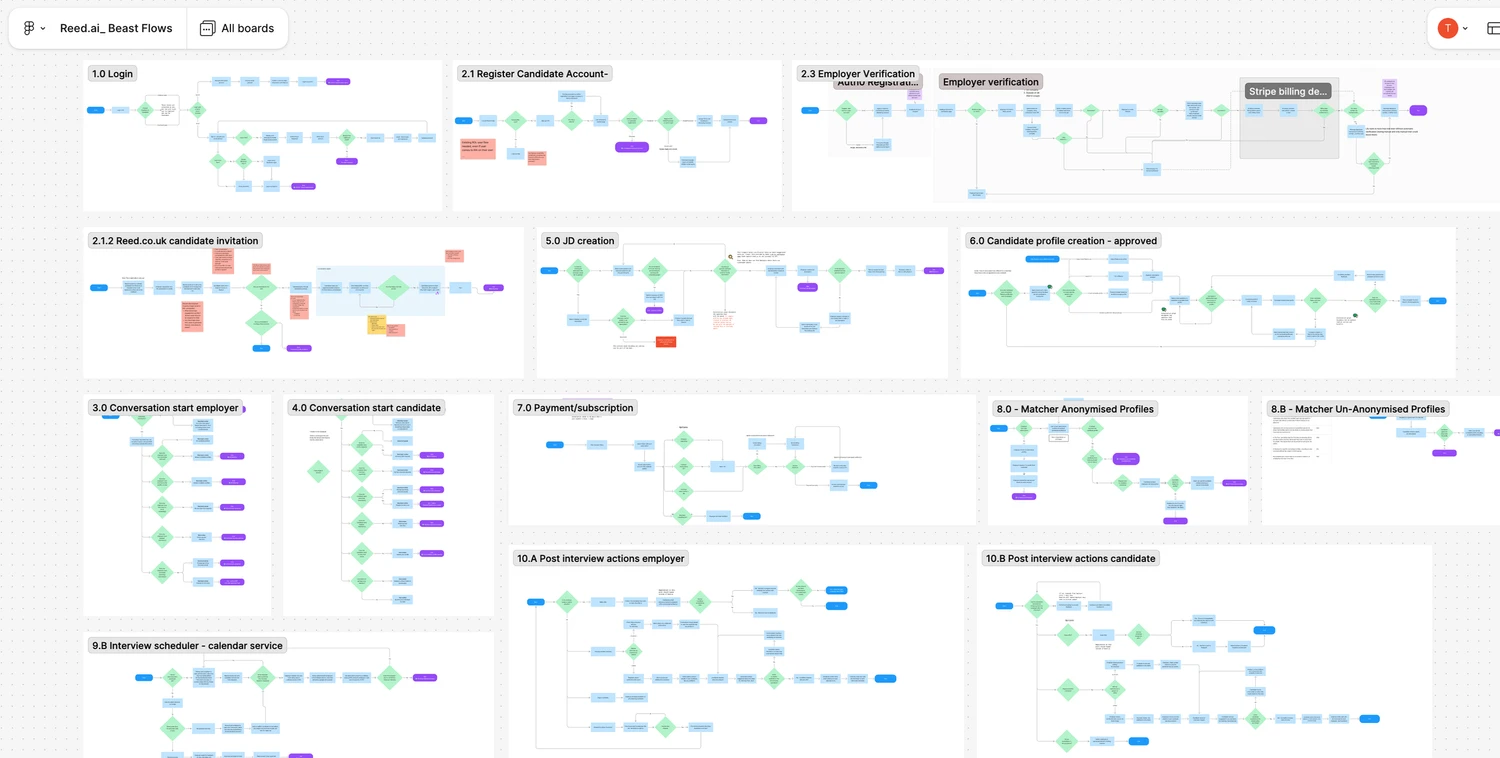
Guided by the research and hypothesis, the UX strategy focused on restructuring the hiring flow.
One key decision was to flip the traditional recruitment process. Instead of centring the experience around CVs and candidate profiles first, the product emphasised job requirements, skills, and role fit upfront. This helped reduce bias and framed candidate evaluation around objective criteria.
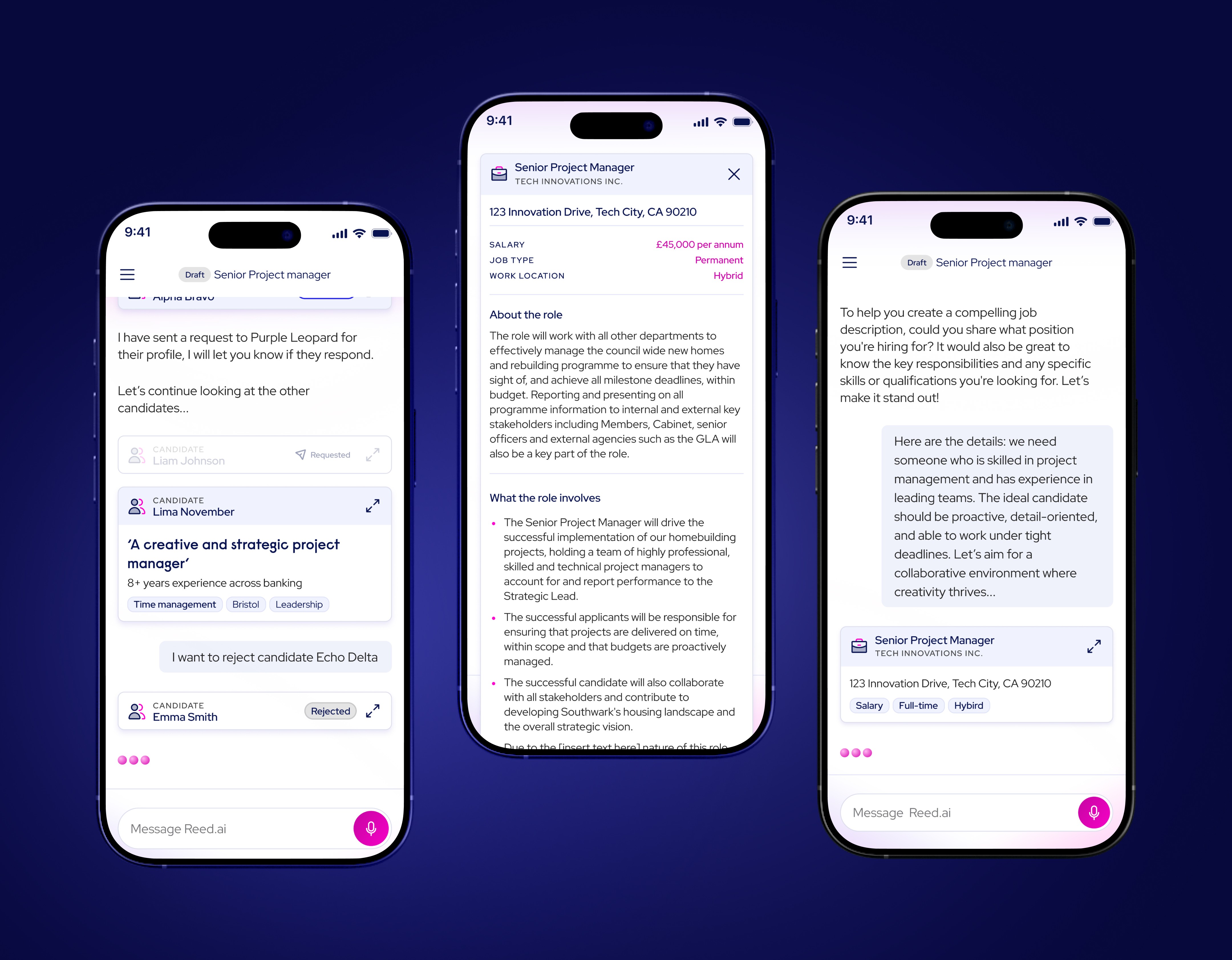
The redesigned flows reduced cognitive load, surfaced relevant insights at the right moment, and encouraged faster, more confident decisions from recruiters.


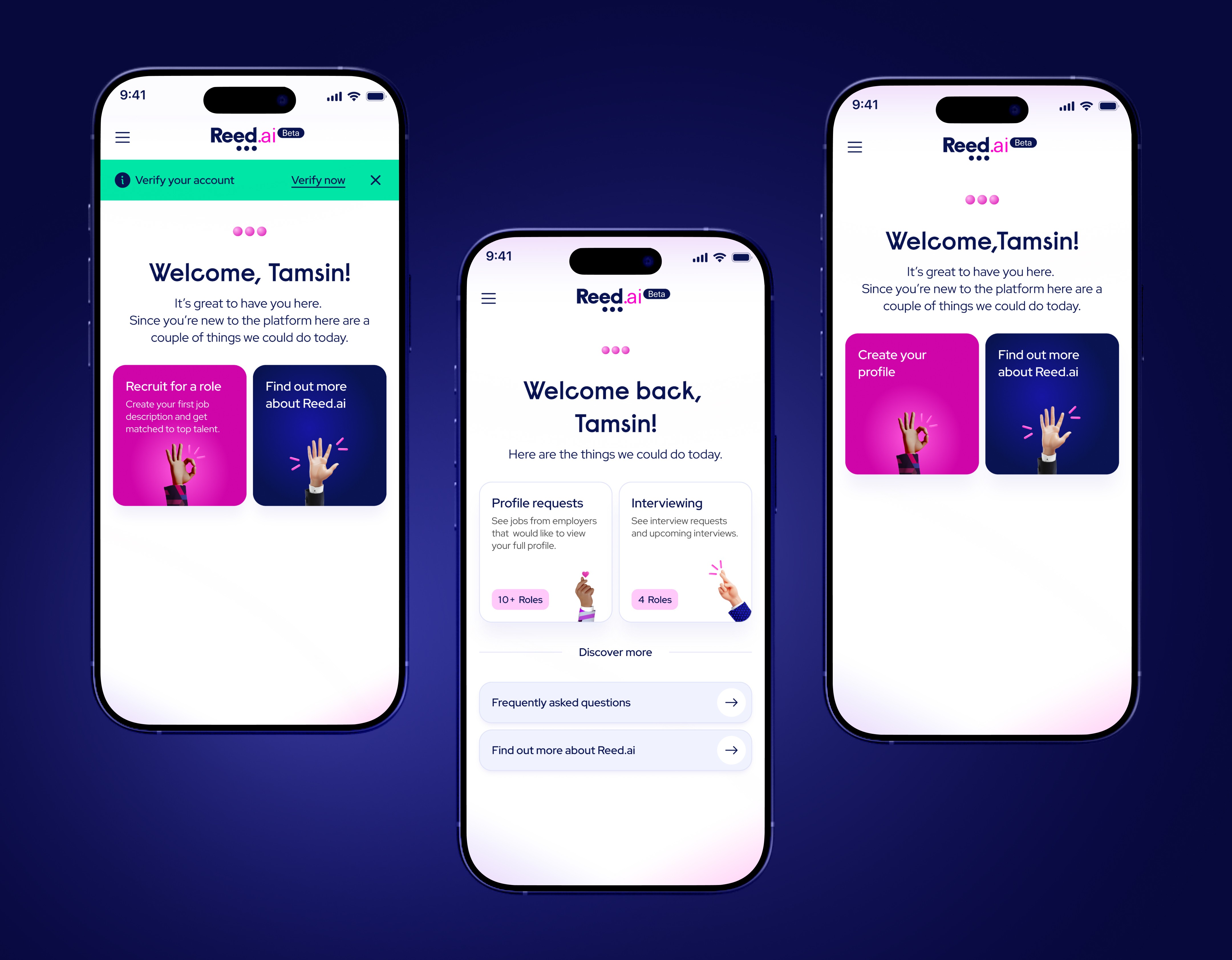
The UI was designed to feel neutral, clear, and trustworthy - reinforcing confidence in AI-assisted recommendations. Visual hierarchy, spacing, and interaction feedback were used to explain why candidates were suggested, without exposing unnecessary technical complexity.
Special attention was given to comparison views, candidate summaries, and feedback states, supporting informed decision-making rather than passive automation.
The experience was designed responsively to support different recruiter workflows.


Outcomes
& Impact
The redesigned experience led to measurable improvements:
38% reduction in bias across AI-assisted candidate evaluations
Higher engagement from both employers and candidates
Faster hiring cycles and improved shortlisting efficiency
Increased trust in AI-driven recommendations
Together, these outcomes contributed to healthier marketplace dynamics and improved platform performance.
Learnings
Designing for AI-driven products reinforced the importance of transparency, explainability, and user control. The most effective solutions did not hide complexity, but made decision logic understandable and actionable.
Close collaboration with data and engineering teams was essential to embedding ethical considerations directly into the product experience.